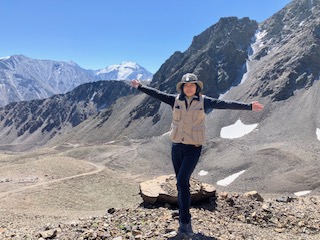
Carbonation of ultramafic rocks, which are derived from the Earth’s mantle, occurs through reactions between rocks and CO₂-bearing fluids in subduction zone environments. However, the factors controlling these reactions have not been fully understood. In this study, we investigated carbonated ultramafic rocks from the Setogawa area of Shizuoka, Japan, and demonstrated that the protolith strongly influences both the progression of carbonation and the resulting mineral assemblages. In particular, Ca-rich clinopyroxene-bearing rocks underwent listvenitization with less infiltrating fluid than Ca-poor olivine-rich rocks and preferentially formed dolomite. In contrast, Ca-poor rocks predominantly formed magnesite. These results indicate that the whole-rock composition of the protolith, especially its calcium (Ca) content, is a key factor controlling carbonation processes.
Tatsuya Hattori, Ryosuke Oyanagi, Tomoyuki Mizukami, Yumiko Harigane, Mayuko Fukuyama, Asuka Yamaguchi, Tomoaki Morishita (2026) Carbonation of diverse ultramafic rocks: implications for Ca-rich protolith from the Setogawa Group, Central Japan. Contributions to Mineralogy and Petrology, 181, 74.
https://doi.org/10.1007/s00410-026-02359-0
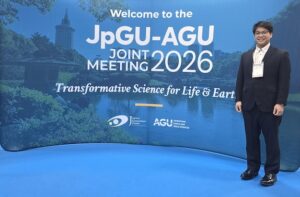
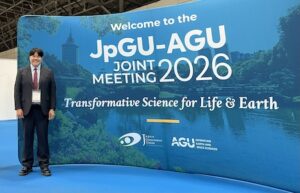
JpGU2026 and visit to TDK
Alejo san, Ylam san, and I had a talk at the JpGU2026 in Chiba, Japan in May. I also visited to the TDK Product Center in Chiba, Japan.
Update
The lab member list has been updated with the start of the 2026 academic year.
A paper on high-pressure collision metamorphism in Mongolia
We examined the pressure–temperature paths and timing of eclogites and metamorphic rocks from two serpentine mélanges located about 200 km apart in the Zavkhan Belt, Mongolia. Despite their protoliths differing significantly in age and origin, both units record the same high-pressure metamorphic event around 520 Ma, indicating they belong to a large mélange belt. This implies that subduction-zone serpentinite mélanges incorporated diverse rocks, transported them to great depths, and underwent metamorphism during continental collision.
Manzshir Bayarbold, Atsushi Okamoto, Noriyoshi Tsuchiya, Otgonbayar Dandar, Shreya Mukherjee, Dhanya Gelli, Geri Agroli, Mayuko Fukuyama, Jamba Byamba. (2026) Subduction-induced high-pressure collision metamorphism: Evidence from Early Cambrian eclogites in the HP Hutul Mélange, Zavkhan Terrane, Western Mongolia. Gondwana Research, 155, 176-195.
https://doi.org/10.1016/j.gr.2026.02.002
A paper on modal analysis of fine‑grained or weathering rocks using Micro‑XRF
This paper demonstrates that modal composition analysis using micro‑XRF is highly effective for fine‑grained or weathered rocks, offering advantages over the conventional point‑counting method. The study was conducted by Ms. Nannapat, who was a Special Research Student at Akita University.
Nannapat Kummoo, Ladda Tangwattananukul, Mayuko Fukuyama (2025) Classification of granitic rocks using stained rock and μ-XRF analysis: Comparison with lithogeochemical data. Bulletin of Earth Sciences of Thailand, 17, 12-25.
https://ph01.tci-thaijo.org/index.php/bestjournal/article/view/260729
A paper on the formation of Li-pegmatite has been published.
In southern Thailand, a large lithium (Li) pegmatite deposit has been discovered. In this paper, we conclude that the formation of these granites and Li-pegmatites in the region is linked to orogenic events and plate subduction during the Late Triassic, Late Cretaceous, and Paleocene. The Li-pegmatites originated from highly fractionated tourmaline granite magma during the Late Cretaceous. This study was conducted as part of Dolnapha Phrairoj’s master’s research.
Dolnapha Phrairoj, Mayuko Fukuyama, Ladda Tangwattananukul (2025) Geochemical and geochronological Constraints on the Petrogenesis and Tectonic Evolution of Li‐Pegmatites and Granites in Phang Nga and Phuket, Southern Thailand. Resource Geology, 76, e70024. (20 pages)
DOI: https://doi.org/10.1111/rge.70024
A paper on the formation of poikilitic hornblende pyroxenite has been published.
Wakazono, A., Fukuyama, M., Itano, K., Harigane, Y., Tamura, A., Morishita, T. (2025) Poikilitic hornblende pyroxenite in the southern end of the Abukuma Mountains, Northeast Japan, as result of adakitic magmatism. Frontiers in Geochemistry, 3, 1697337.
https://doi: 10.3389/fgeoc.2025.1697337
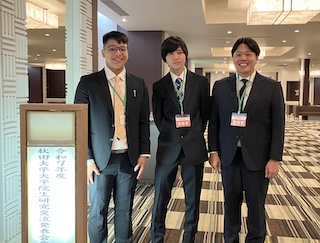
Akita University Graduate Student Research Exchange Presentation 2025
On October 28, 2025, Alejo san, Matba san, and Suzuki san presented their research at the Akita University Graduate School Student Research Exchange Presentation 2025.
A paper published on the metal fertility of magma revealed by zircon chemistry
Kennethjer Alejo & Mayuko Fukuyama (2025) Geochemical and geochronological insights into the metal fertility of magmas associated with the Kennon Cu–Au porphyry deposit of Black Mountain in the Baguio Mineral District, North Luzon, Philippines. Lithos, 516-517, 108243.
https://doi.org/10.1016/j.lithos.2025.108243
Fieldwork in Mongolia
I had a fieldwork in vast and incredible landscapes in Mongolia from July to August. It is my first visit to Mongolia. Truly enjoyable. I would like to thank my Mongolian colleagues, their families, and their friends for their warm hospitality and support.